England & the Rhineland, 16th–17th c.
Isaac Newton: Roth Mallor's Work
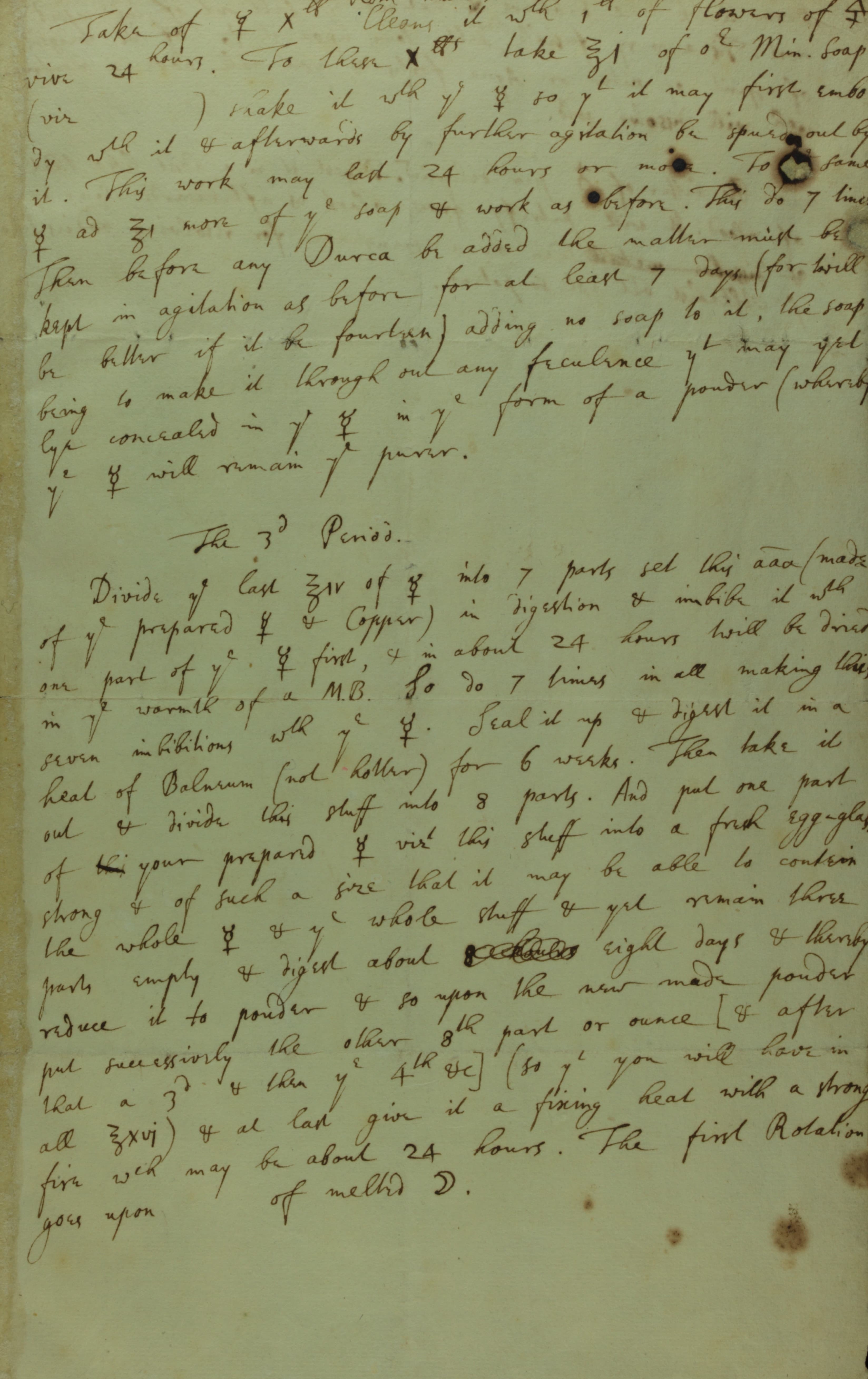
A page in Newton's own hand copying two steps toward the philosophers' stone from a little-known German author.
- Work
- Isaac Newton, "Roth Mallor's Work", alchemical manuscript (Science History Institute, QD14 .N498)
- Artist / creator
- Isaac Newton (1642-1727)
- Origin & date
- England, late 17th century (undated autograph)
- Held by
- Science History Institute, Philadelphia
Format
The full-resolution color-managed file — yours to print, study, and keep.
Size
Sized to protect print quality — this scan’s resolution supports sizes up to 18x24 cleanly.
$24.00
The story
A page of close, slanting English handwriting, corrected and underlined, headed with a title and a few symbols. The hand is Isaac Newton's. According to the Science History Institute, which holds it, the page records two steps in the making of the philosophers' stone, drawn from the obscure German alchemist Erasmus Rothmaler, whom Newton calls "Roth Mallor", together with recipes for "a menstruum that will disolve gold." Newton left an estimated one million words of alchemical notes. This leaf was lot 18(c) in the Sotheby's sale of his papers. It shows the most famous scientist of his age doing what every other reader of these books did: copying out a stranger's recipe, carefully, in case it worked.
About this reproduction
- Faithful reproduction of a public-domain work, sourced from Science History Institute, Philadelphia’s open-access release.
- Printed to order on archival cotton-rag stock, pigment inks rated 100+ years.
- Color-managed to the source scan.
- Ships in 5–8 business days; satisfaction guaranteed.
Image courtesy of the Science History Institute, Philadelphia, licensed CC BY 3.0.
In situ
See it framed
Isaac Newton: Roth Mallor's Work composited into real, photographed rooms — choose the room and the frame, see exactly what arrives.

Shown at 18x24" — the largest size this piece’s scan holds full clarity at.
More from Hermetic Diagrams & Scrolls

Ripley Scroll — Beinecke Mellon MS 41
Beinecke Rare Book & Manuscript Library, Yale University

Ripley Scroll — Getty Research Institute, 950053
Getty Research Institute — Manly Palmer Hall Collection of Alchemical Manuscripts

Ripley Scroll — Huntington Library, mssHM 30313
The Huntington Library, Art Museum, and Botanical Gardens
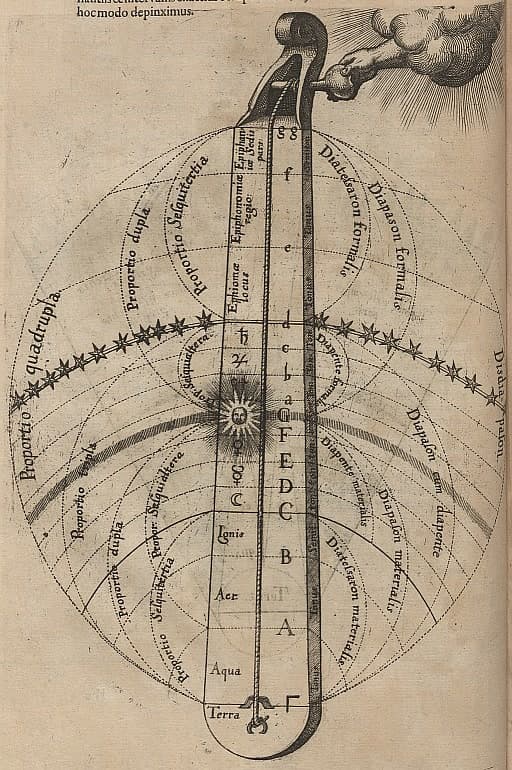
The Divine Monochord
Deutsche Fotothek, Saxon State and University Library Dresden (SLUB)